Milk-Jug Propelled Projectile Launcher
This project required the design and fabrication of a mechanically sound launching system capable of propelling a repurposed-plastic projectile 10 metres using only the pressure generated by collapsing a standard 4-litre milk jug with one foot. The exercise demanded rigorous adherence to constraints, thoughtful material selection, and an ability to translate conceptual sketches into a functional physical prototype. The final mark—97%—reflected excellence across ideation, construction quality, system performance, and aesthetic refinement.
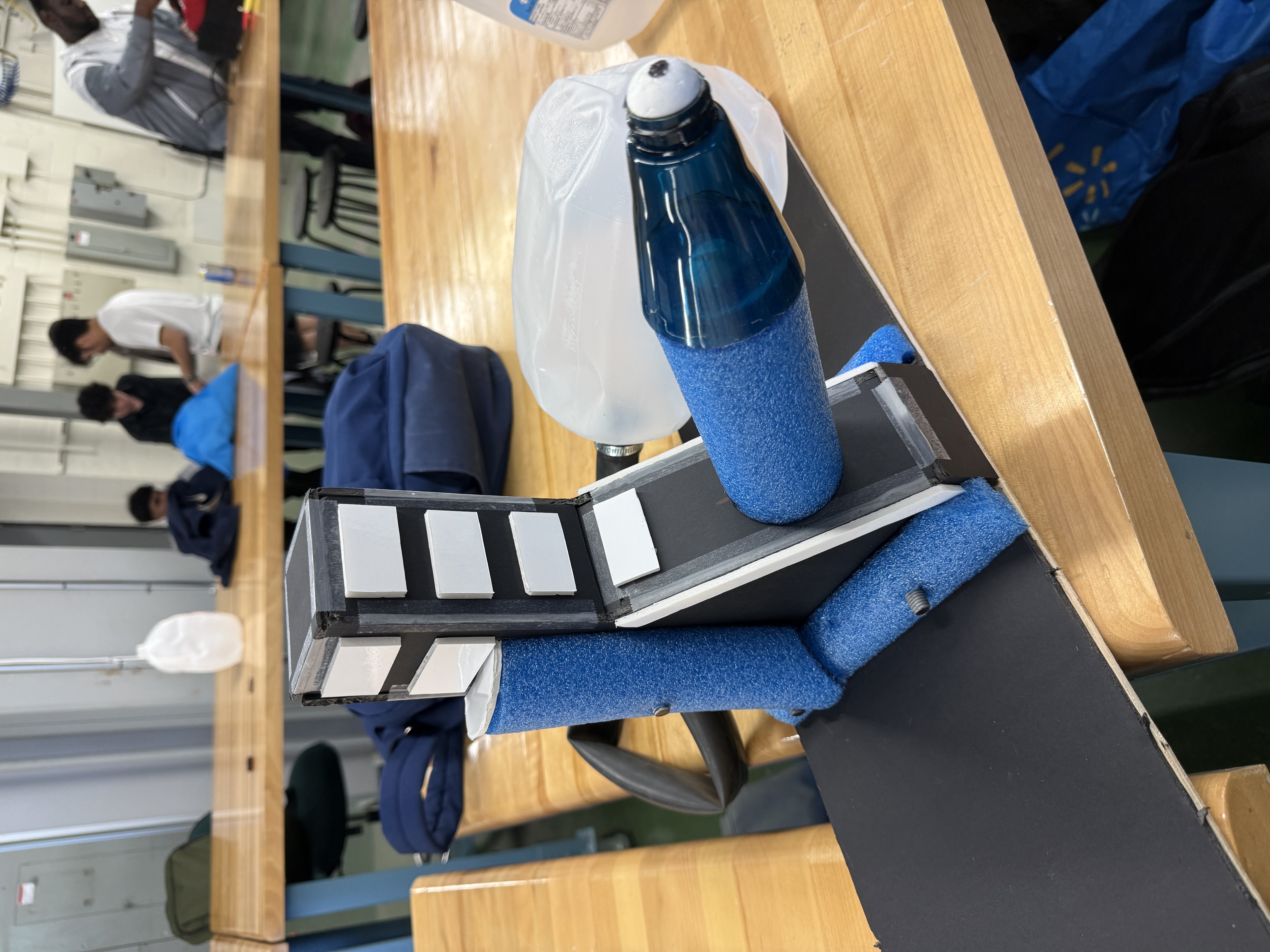
Problem
To engineer a stable, ground-level launching system and a fully repurposed-plastic projectile that could consistently reach the 10-metre target distance with high accuracy, while meeting strict constraints on materials, fabrication methods, and user-applied force. Constraints included: the only permissible source of energy being manual compression of a 4L milk/water jug by stepping on it; launching pad free-standing with no ground anchoring; projectile constructed strictly from repurposed plastic materials; minimal use of adhesives and tape; projectile must remain intact as a single unit throughout flight.
Approach
The design process focused on isolating the system into three primary subsystems: Energy Transfer System (converting jug collapse into coherent airflow), Nozzle Dynamics (controlling the pressure gradient and directing thrust), and Projectile Aerodynamics (designing a stable flight body from repurposed components with minimal drag).
I produced three divergent sketches examining vertical, inclined, and modular loading configurations. The final build adopted a space-station aesthetic with a rigid truss-style frame, angled intake chamber, low-friction launch rail, and optimised nozzle tube. The projectile (Version 3) was lightweight, drag-reduced, and flight-stable, formed from pool noodle segments and repurposed packaging plastics.
Methods & Tools
- Applied fluid dynamics to low-pressure pneumatic systems
- Structural design and mechanical layout under constrained materials
- Rapid prototyping methodology (sketch → model → prototype → refinement)
- Iterative testing and quantitative performance improvement
- 3D concept exploration and system architecture design
- Material selection and repurposing techniques
Outcome
- Achieved 10.2 m on second attempt, surpassing the 10-metre threshold
- Received full marks (12/12) for initial concept exploration
- Received full marks (13/13) for physical prototype
- Awarded 19/20 for achieved distance
- Awarded 38/40 for launching system impression
- Awarded 15/15 for projectile impression
- Overall Grade: 97/100 (A+)
Key Leverage
This project showcased the importance of precision in both design intent and fabrication discipline. By treating a simple constraint—a collapsing milk jug—as a controllable energy source, I demonstrated the ability to extract performance from limited inputs through careful engineering judgement. The final system's consistency and accuracy reflected a rigorous conceptual foundation and a commitment to meticulous execution.